Most solar panel manufacturers guarantee that they will retain 90% of their advertised energy output in the first 10 years of use. A recent five-year study by Sandia Labs made a surprising discovery.
Sandia National Laboratories, part of the US Department of Energy, found that 13 of the 23 different systems tested have an effective lifetime of more than 30 years. Specifically, these systems produce 80% of the electricity after three decades that they generated when new.
Read also: Short guide: what are water-to-water geothermal heat pumps suitable for Romania’s climate
The study analysed 834 photovoltaic panels, installed in three different climates and from seven manufacturers.
Reliability of these technologies increased despite the fact that PV panel prices have accelerated to drop by up to 85% since 2010, Sandia Labs reports. Affordable costs have boosted investment in the field. In the world’s largest economy, the US, enough PV has been installed this year to power 22 million homes, according to EcoWatch.
There are three popular types of solar panels: monocrystalline, polycrystalline and thin-film. The former have higher efficiency, the latter are more affordable, and the latter are very durable. Recently, hybrid systems have also emerged, combining photovoltaics with wind turbines.
Another new technology uses solar panels to produce hydrogen.
The Best Online Bookmakers July 16 2026
 Bonus€500+ 200 Free spins |
 Bonus€1,000 |
 Bonus€1,000 |
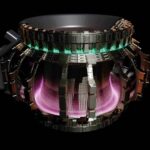 The SPARC fusion reactor is the infrastructure of the future for the AI era
 Galaxy Tab S10 Lite is really cheap right now
 Why I use a fan in winter and why I especially rely on this model!
 Spotify is increasing its prices again in the USA – what that means for us
 Dead Cells Studio surprises with a roguelite insider tip